Thursday, March 24, 2011

Democrats & Humanitarians...In Name Only

Consider the following names of these countries:


  • People's Democratic Republic of Algeria
  • People's Republic of Bangladesh
  • People's Republic of China
  • Democratic People's Republic of Korea
  • Lao People's Democratic Republic
  • Great Socialist People's Libyan Arab Jamahiriya


I wanted to post these names to exhibit one commonality with all of them: none of these nations are for the "people", but rather for a ruling elite who hold onto power tightly and with significant firepower. None of them are "democratic", either. There is a simple, immutable point that I made whilst speaking with a friend a while back about such things: that any nation that has to inculcate "democratic" into its title is, without exception, undemocratic. More than likely, it is a brutal dictatorship. (Can anyone say that North Korea, aka "Democratic People's Republic of Korea" is anything approaching? Additionally, it is barely a republic, but rather a monarchy of sorts, with Kim Jong Il grooming his son to take over after he passes, just as he took over from his father Kim Il Song.) Perhaps one of the more interesting choices of names was the German Democratic Republic, aka East Germany or communist Germany. The contrast of this name with its western counterpart, the Federal Republic of Germany, and you get the idea. Kind of hard to justify one name against the other when the denizens of the German Democratic Republic were continually shot attempting to cross over into the Federal Republic of Germany; one would think the opposite would've occurred, one being a "democratic republic" and all. The truth of the matter was that East Germany was one of the most oppressive police states in history, certainly in European history. But the title certainly belied that, at least to the eye and the ear. Certainly Libya, given its terrorist history (Flight 103 in 1988, which I actually took six months prior) and current internecine butchery, doesn't qualify as for the "the people".


The wider implication behind this is simple: dictatorships know that they're truly illegitimate, ergo they go to great lengths both in spoken and written word. Orwell keyed in on this in 1984, with his labeling of the edifice dedicated to torture as the "Ministry of Love". In the real, non-fiction world, this would be the equivalent of "Arbeit macht frei" (translated, "Work will set you free", stated in sign at the entrance of several work/death camps by the Nazis, the implication of hope where none truly existed.) I recall during my college years a professor, who's name still stays with me but will not be published here, who said that the Soviet Union made a point of glorifying greater citizen participation in its elections simply because an overwhelming majority brought themselves to the polls, and as a result, bestowed upon themselves greater democratic credentials than the United States. Not lost in this was that there would be only one candidate per office, and that any unfortunate soul who failed to show to the voting location would be paid a visit or called to ensure their presence. Again, the show of democracy was more important than the reality of it, and considerably more importance, the show of humanitarianism was more important than an actual policy of it.


Men of power are fully aware of their wrongdoing. Titles and words matter to them, for in some respects, rhetorical cover for tyrannical murder serves as some semblance of spiritual emollient for them. But the conscience knows something that words can't gloss over.


At least I hope it does, if there is any justice in the world.

Sunday, February 27, 2011

The Competing Visions of Alexander Hamilton & Thomas Jefferson


Alexander Hamilton and Thomas Jefferson could be the two most intellectually important figures in American history. (James Madison also deserves honorable mention.)

And they hated each other.

On the one side there was Hamilton. Born in the West Indies, Hamilton was the illegitimate son of a ne'er-do-well Scottish nobleman and a still married (she fled her first husband to escape an unhappy union) mother. His childhood got off to an unfortunate start, and it stayed that way. The chain events of his life read like a modern-day tale filled with dysfunction, abandonment, and alienation. His father abandoned his mother; his mother died of fever; her first husband successfully claimed her estate as his own, leaving the illegitimate Hamilton and his younger brother with nothing; subsequently adopted by a cousin who then committed suicide thereafter, he was permanently separated from his brother as a result. Hamilton's saving grace(s) were books. Denied legitimacy by the Church of England due to being born out of wedlock, he was excluded from Anglican financed religious and educational studies. As a result, Hamilton was occasionally tutored privately, and attended Jewish private schools on occasion. Working as a clerk for an import/export company as a young man in St. Croix, Hamilton penned an essay for a local newspaper that so impressed the publishers and the readers that a collection was taken to send Hamilton to America to get a proper education; he eventually landed at King's College (now Columbia University).

Thomas Jefferson's upbringing couldn't have been more different. One of ten children born into a prominent Virginia planter family, Jefferson was brought up in wealth and privilege. When his father passed, a 14-year-old Jefferson inherited 5,000 acres of land and dozens of slaves. He attended the best schools and was tutored by the best educators available, learning Latin, Greek, and French in his early teens. In short, an upbringing diametrically different than that of Alexander Hamilton's.

Competing Visions For The Young Republic-Thomas Jefferson

"I think our government will remain virtuous for many centuries as long as they are chiefly agricultural."-Thomas Jefferson

Like many of his day, Jefferson did not consider himself to be an American first; he was a Virginian. The perception of the day was that one hailed from their state, not from America as a whole. It was provincialism of the first order. (One could even say this about George Washington, though less so; Washington's policy preference whilst president clearly angled towards Hamilton. More on that later.) All forms of centrality of government were anathema to Jefferson. He had no interest in a strong, central core to the United States. His vision was of a nation of gentlemen-farmers, where local issues were decided on a local level, and that only in times of crisis would the other states form a union of sorts to fend off foreign threats. His distaste for central power can be thus summed up by an excerpt from a letter that he wrote to Abigail Adams in 1787: "The spirit of resistance to government is so valuable on certain occasions that I wish it to be always kept alive. It will often be exercised when wrong, but better so than not to be exercised at all." [One can detect elements of Tea Party sentiment in that one. It is always best to refresh one's memory with a dose of history just to remember that these sentiments are hardly original.] A considerably more chilling sentiment was revealed in another letter to a compatriot: "What signify a few lives lost in a century or two? The tree of liberty must from time to time be refreshed with the blood of patriots and tyrants. It is its natural manure." This from the author of the Declaration of Independence. Jefferson's vision for America can be succinctly summed up in the following passage from Paul Johnson's excellent "A History of the American People":

He believed that the new republic would flourish only if the balance of power within it was held by its farms and planters, men who owned and got their living from the soil. His reasoning was entirely emotional and sentimental, and had to do with the Roman republic, where Cicero had made the same point. Farmers, he believed, were somehow more virtuous than other people, more staunch in their defense of liberty, more suited to run a res publica.


In other words, Jefferson opposed any and all centralized, official institutions. That would include:
  • A standing army and navy
  • A national treasury
  • A central bank
A betrayal of simple, agrarian republican virtues as Jefferson saw it, these were. Banking was "in infinity of successive felonious larcenies", as he wrote in a letter to John Adams, who was only slightly less suspicious of such things. (Jefferson's aversion to a national standing army no doubt derived from his knowledge of the actions of Sulla Felix and Julius Caesar, the two most culpable for extinguishing the Roman Republic.)


Competing Visions For The Young Republic-Alexander Hamilton

" If banks, in spite of every precaution, are sometimes betrayed into giving a false credit to a person described, they more frequently enable honest and industrious men of small or perhaps no capital to undertake and prosecute business with advantage to themselves and to the community." -Alexander Hamilton

Perhaps as a result of his experiences working in the import/export firm Beekman & Cruger whilst an adolescent in the West Indies, Hamilton had a nose for business, money, finance, economics and what made an economy tick. Many historians (Paul Johnson, Ron Chernow, Richard Brookhiser) have rated Hamilton as the only real bonafide genius amongst the first great American statesmen. He commanded artillery effectively during the Revolutionary War without the benefit of military training, but rather through reading about artillery techniques and strategy in books. He acted as Washington's aide-de-camp throughout the war, and was instrumental in no small way in getting requisitioned materiel to the right places at the right times. He kept squabbling amongst the officer class to a minimum, ensuring Washington's travails didn't get any worse than they already were at certain points. As president, Washington lent his complete confidence to all of Hamilton's financial blueprints: establishing a treasury, forming a central bank, and developing an industrial base in the United States. Nothing could be more horrifying to Jefferson than these concepts realized.

There had been personality conflicts between Jefferson and Hamilton for some time. Prior to Hamilton's appointment as the first Secretary of Treasury, Hamilton was instrumental in effectively arguing for the need to replace the failing Articles of Confederation in the Federalist Papers and at subsequent constitutional conventions. Jefferson, away in France on diplomatic mission, had no hand in the Constitution other than correspondence with fellow Virginian and constitutional architect James Madison. He was not wholly in disagreement with it, but he was extraordinarily uncomfortable without a strongly enunciated list of inherent rights, thus the Bill of Rights was added to the document.


When both were in the Washington's first administration, Hamilton proposed that all state debts get rolled into government treasuries. Initially against this, Jefferson reluctantly accepted Hamilton's proposition in return for Hamilton's agreement to move the seat of government south.* (See fuller explanation of this below.) Jefferson rued the day that he made this deal, called "the Compromise of 1790", but even this wasn't what permanently ruptured any and all relations with Hamilton. That would come about when Hamilton took it a step to far: the proposition of a national central bank in the form of the Bank of the United States. Nothing could have horrified Jefferson more, nothing could have cut right to the core of everything he envisioned the United States NOT to have morphed into. This may not have been too much of a surprise to Hamilton to have Jefferson come out against it, but he was terribly shaken by the schism with James Madison, his partner in writing both the Federalist Papers and the Constitution. Madison declared that, "In reviewing the Constitution, it was not possible to discover in it the power to incorporate a bank". Madison, no doubt in thrall of not only Jefferson but also his Virginian agrarian farming constituents tried to stop the central bank. Hamilton countered with a reading of the "necessary and proper clause" of the Constitution, driving the point home by reading an excerpt from the Federalist Papers (#44) in Congress, "No axiom is more clearly established in law or in reason than wherever the end is required, the means are authorized; wherever a general power to do a thing is given, every particular power for doing it is included." Implicit in this reading of this excerpt of the Federalist is that the very person opposed to the central bank was the one that wrote that excerpt: Madison.

Jefferson, for his part, considered the formation of the central bank a capital offense. Clearly he didn't recognize that the Constitution had effectively trumped state law for federal law. But that didn't stop him from having sentiments that said, "The power of erecting banks and corporations was not given to the general government; it remains then with the state itself. Any person to recognize a foreign legislature [he's speaking of the US Congress, btw.] in a case belonging to the state itself is an act of treason against the state. And whoever shall do so...shall be adjudged guilt of high treason and suffer death accordingly by the judgment of the state courts." Harsh words for this forerunner, the Bank of the United States, to our present central bank, The Federal Reserve. Jefferson hated it that much, and the man wholly responsible for it was his bete noir, Alexander Hamilton.

Hamilton for his part saw no other way for the United States to compete and prosper. A student of Adam Smith (of "Wealth of Nations" fame and considered the father of modern economics), Hamilton saw the British economic model as worthy of duplication, to be expanded upon. It was industrialization, not agro-economics that would take the United States forward. Hamilton saw the United States for what it now is: an economic powerhouse. A sleepy agrarian economy of yeoman-farmers in the Jeffersonian mode was to be "scoffed [by Hamilton] as such puerile reasoning" (1). A few years later, Hamilton submitted his Report on Manufactures to Congress. Jefferson was apoplectic. It represented everything anathema to Jefferson's agro-utopian vision for America: industrial mills financed by speculation and loans from banks. It was shelved by Congress and was never translated into legislation, but it caused quite a ruckus. Jefferson "wondered somberly whether Americans still lived under a limited government....for Jefferson this [general welfare clause] 'permitted Congress to take everything under their management which they should deem for the public welfare'." (These sentiments echo through the ages right to our present day.) That said, the Report on Manufactures clearly had significant impact on the formation of industrialized America. Hamilton's vision won, as it should have.

Conclusion

This post probably came off overly negative towards Jefferson. It was not necessarily meant to do so. The importance of Thomas Jefferson with regards to enshrining the almost-libertarian mind-set into the American consciousness was and still is crucial. Jefferson was wrong about almost everything with regards to economics, but he was right about liberty and the vigilance required to maintain it. It is a vigilance bordering on paranoia, sometimes out of hand, but a necessary streak in the American. He, along with James Madison, were instrumental in getting a Bill of Rights inculcated into the American Constitution. (Even as he was in France on diplomatic mission.) He was wrong to some extent on insisting on the supremacy of state authority in comparison to federal authority, though not entirely: even to this day, some issues cannot be successfully decided and implemented in a "one size fits all" kind of way, taking into no account the differing peoples, cultures, and geographies of our states. He opposed a standing army, feeling that it was a threat to the nascent republic, yet founded the United States Military Academy at West Point. He hated the idea of a central treasury, yet found it very useful when he assumed the presidency. A mass of contradictions, that Jefferson.

Hamilton was right about finance, economics and a forward vision for the United States. He was wrong about many other things, not the least of which was his philosophy that the republic should be ruled by an intellectual elite. In this, Jefferson had the philosophical upper hand. One would think that the forerunner of the modern Republican Party would be Jefferson, given his "states rights" inclination, his distrust of banks (particularly a central bank) and his embrace of the agrarian ethos; that would be mistaken to do so. Jefferson is considered the godfather of the modern Democratic Party, mainly for his populist, anti-elitist sentiments. Conversely, Hamilton is considered to be the godfather of the Republican Party, as he was the advocate for the monied classes, the industrialists, the bankers, and the speculators. But he also favored a strong central government, one that was dominant over all state legislatures. This is a very Democratic sentiment. And so neither figure fits neatly into the ideological order of the modern American political parties.

Concerning the central bank, the Bank of the United States, it continued its charter with the federal government until Andrew Jackson, a Jeffersonian to the core, discontinued its charter. He subsequently moved all its assets into state-run banks; runaway inflation and the Panic of 1837 were the end result. Another panic, in 1907, led to the reformation of a central bank in 1913, this time under the name "Federal Reserve" . Like Jefferson, Madison, Patrick Henry, and Andrew Jackson (all southerners, not coincidentally) before them, we have those attacking the Fed, like Rep. Ron Paul (R-Texas). Some things never change. The ghosts of Hamilton and Jefferson are still squabbling, two centuries later.

*Explanation: the State of New York had been decimated by the Revolutionary War both physically and economically. By comparison, Virginia had been only lightly affected and was financially solvent. Hamilton suggested that all states pool their debts into national debt, therefore enabling financially weak states to recover whilst stronger states shoulder more debt burden. "Assumption" as it is called, enabled the original United States (13 of 'em) to recover and prosper. Had Jefferson not agreed to this, certain northeast states that had been routed by the British would've gone under.


(1) Excerpt from "The History of the American People", by Paul Johnson

Other books consulted in the writing of this post:
a.) "John Adams" by David McCullough
b.) "Alexander Hamilton" by Ron Chernow
c.) "Alexander Hamilton-American" by Richard Brookhiser







Thursday, January 27, 2011

Thoughts On Rome, Comparisons To The United States

A few months back I picked up a book called "Are We Rome?", by a Vanity Fair writer named Cullen Murphy. Relatively well-written, Mr. Murphy delves into this oft-thought of question and essentially comes up with an over-arching thesis, simply put by an NPR reviewer as such,
"It's not so much America's tendency toward decadence and our astounding military might that make us like Rome. It's the dangerous blurring of public and private responsibilities, paired with an inflated sense of power that can blind us to what's happening beyond our borders." Some of this may be true, particularly the latter portion. As for the former, Mr. Murphy claims that massive public works and keeping necessary institutions run federally or municipally is the key to citizen cohesion. Case in point: Mr. Murphy claims that subcontracting things such as marital or business arbitrations to private entities, or worse, subcontracting prisons to private companies (like Wackenhut) are eroding our sense of shared mission. Perhaps true, but as someone with libertarian leanings that thinks that government should be the last, not first, solution to a problem that could be privately (and profitably) dealt with in an effective manner, I take issue with Mr. Murphy's thesis. The point of devolving certain municipal or federal powers to private entities (who are still subject to governmental oversight) is, simply put, done to lessen the burden of the taxpayer. Additionally, anything that can lessen the intrusiveness of government, even if it is for things like securities or real estate arbitration, is a good thing. Better that people who know better arbitrate on matters particular to a given industry have the ultimate say-so in it. They also serve to unclog the public legal system for cases that cannot be adjudicated any other way. Read the book if you wish. I learned a few things, despite my disagreements with it.

So...now that I got that out of the way, my true intent behind writing this post. A conversation that I had with a friend of mine a while back (who happens to have had a pretty impressive Jesuit education and a pretty good memory for what he was taught) turned to Roman history. I realized that I knew very little of it. (This is 2005, btw.) That, combined with the excellent HBO series Rome, sparked my interest. I consequently went on a six year bender of eating up everything on Rome that I could get my hands on. My father, schooled in this stuff more than I at the time (I subsequently passed him in this department) suggested that I start with Suetonius' "12 Caesars", written in 121 AD. Aside from the charge that I got from reading something nearly two-thousand years old, I found it eminently readable and translatable into real-world terms. From there I moved to Plutarch's "Lives", detailing prominent Romans and preceding Greek statesmen and making (sometimes) apt comparisons between them. Then onto contemporary historian Tom Holland's "Rubicon-The Last Days of the Roman Republic", an absolute stunner and the perfect guidebook if you were watching HBO's "Rome" series. (Better to track the personalities and the consistencies/inconsistencies of the show, you see...) Then onto Livy, an excellent book about Cicero ("The Life & Times of Rome's Greatest Politician"), and of course, the truncated (but still exceptionally dense) version of Edward Gibbon's "Decline & Fall of the Roman Empire". (The first volume was published, interestingly, in 1776. Gibbon was a Member of Parliament who undoubtedly was involved in discussions and debates regarding that rebellious North American colony we now live in.) A few books on the Greco-Persian Wars, the Peloponnesian War, Alexander the Great, and some classical philosophy rounded out my reading list for the last six years. Proceeding all of this were bios on Adams, Hamilton, and Washington, as well as the excellent 1776 by David McCullough. Oh...and the comprehensive "History of the American People" by Paul Johnson....1000 pages of bliss, it was.

Pardon the self-indulgent listing of all and sundry that I've read for the last six years, but it brings me to a salient point: One cannot understand the linchpins of our republic if one doesn't have an understanding of Greco-Roman and Anglo-Saxon history, politics, and philosophy. (Particularly the latter.) One cannot "get" the thinking of the Founders (who signed the Declaration of Independence, as well as fought the war for it) or the Framers (those who devised, edited, debated, and ratified The Constitution) unless one knows the history that they knew. It cannot be accurately understood through any other lense.

The Constitution is a written document. This might seem like nothing, but consider that the British have a constitution, but it is NOT written one. The most successful and long-lasting republic in history, Rome also didn't not have a written constitution. These unwritten constitutions were based on customs and precedents, but could be revoked, twisted, perverted, and otherwise subjugated through sophistry and the ever-present reason used throughout the ages, national emergency. It is no small coincidence that the rhetoric coming from Washington DC these days always has a certain spin or urgency to it, and either is a war (war on poverty) or crisis (energy crisis, healthcare crisis, climate change crisis, etc.). Language like this has always been used to justify the seizure of the rights and/or property of private citizens....because to the ruling mandarins, it's all a matter of national security or public safety. To wit:

  • Lucius Cornelius Sulla (referred to going forward as Sulla) sought to "restore the republic" after being cheated (unconstitutionally) by a rival general/statesman/populist (Gaius Marius) out of a military command. Sulla turned his army on Rome instead of Pontus (where his revoked command mandated he go to finish off a rebellious King Mithridates), breaking the most sacred of covenants-that no Roman general can march his army through the city gates under arms. Sulla then reversed the revocation of his command via the senate, marched out to Pontus, defeated Mithridates, turned back to Rome, and marched through the city gates under arms again. In his absence, rival Marius rigged the senate to appoint himself consul (the highest position in Rome prior to the demise of the republic) in perpetuity, also an unconstitutional act. On Sulla's return, Marius fled and eventually died of natural causes (such as they were), his allies were promptly proscribed and/or executed, and Sulla forced a senatorial decree appointing himself dictator. This was all done under the need for a "restoration of public order" and "public security". From there, Sulla waged a war of terror on his enemies and their allies, eliminating 9000 of them, mostly noblemen. After a year, true to his word to "restore the Roman constitution" (despite perverting it), he resigned.

  • Julius Caesar was one of Marius' followers, a "populare" (a man of the people). Following the politics of Marius but the actions of Sulla, he too would march through the gates of Rome under arms and seize absolute power. His assassination would trigger a war between his followers (Caesarians) and the old guard seeking to preserve the last vestiges of the Roman constitution (Republicans). In the end and over several years, Caesar's nephew and posthumously adopted son, Octavian (Augustus), would also march through the gates of Rome under arms. Rome would never again be a republic, and its quasi-democratic government and constitution would be forever sundered.

From these two men one can glean several applicable and parallel things to our own republic, our constitution, and why there are certain amendments in it. For one, if it is written, they'll be no dispute about what it says and means. Of this there can be no dispute, as the main architects of the Constitution (Alexander Hamilton, James Madison, and to a lesser extent, John Jay) had an extraordinarily deep knowledge of Roman history, and knew full well what brought the republic down: the personal ambition of extraordinary men who's lust for power was lethally accompanied by legions dedicated to those men, not the republic itself. The fact that they could pervert and subvert a constitution that had no binding force, other than custom, proved too attractive to pass up. In the case of the United States, if someone of power breaks their constitutional vows, one can point to where in the Constitution it was broken. If you don't believe me, consider the pseudonym of the three authors of it whence publishing their thoughts vis-a-vis the Federalist Papers: Publius, as in Publius Valerius Publicola, one of the main conspirators that overthrew the last of the tyrannical kings, Lucius Tarquinius Superbus, and established the Roman republic.

To conclude, I disagree with Cullen Murphy on why Rome crumbled. It spent more time as a republic than it did as a dictatorship, and conquered the entire Mediterranean basin during republican, not principate rule. To my mind, what brought it down was a gradually withering indifference to its constitution and its institutions. If there is a comparison between Rome and our nation, it is that. Under-educated snots like Washington Post writer Ezra Klein are a primary example of this. Stating that the issue with the text is "confusing" because it is "over one hundred years old" (it's 223 years old, mind...), and that it differs "from person to person" and "depends on what they want to get done" is a good example of a mindset that is prevalent amongst many, particularly on the Left. The Constitution protects the individual's freedoms, their property, and their freedom to worship. The Framers understood that these rights have to be enshrined IN WRITING so that people like Klein (and they are legion, and unlike Klein, in positions of actual authority in our government), should they choose to break it, can't rhetorically manoeuvre their way around something that is stated plainly in its texts. And if the Constitution is considered "too old" by people such as Klein, perhaps he should pick up a book and read about where the Framers got all these ideas from. Of course, if he has a problem with the 223 year old texts of the Constitution, I would imagine that 2000 to 2500 year old writings from the likes of Plutarch, Livy, Cicero, Cato, Sallust, Polybius, Plato, Socrates, Aristotle and Suetonius would be way above his intellectual pay-grade. Fortunately, they weren't for Hamilton, Jay, and Madison.

Friday, July 23, 2010

My Summer Job Sucked Worse Than Yours (Part 1)

From time to time, through turns of conversation, I get on the topic with an interlocutor about summers jobs. The debate ensues as to who had the worst summer job or jobs, the best summer job(s), the hardest summer jobs, et al. I feel, and of course this is a matter of my own opinion, that I've had the sh*ttiest summer job of anyone I've spoken to. The story went down as such...

Every summer break, whilst still in college, I'd come home. Happiness ensued in my family household, for another child was in residence, at least 'til the end of the summer. The joy diminished by week two, when my slumming ceased to be entertaining and started to become annoying to my parents, particularly my mother. Monday would start with her walking into my bedroom, and speaking to me (while I was in a dead sleep) about getting a summer job. Day Two started off similarly, but with a bit sharper tone to her voice. Day Three (Wednesday) began with her kicking the side of the bed and rapaciously telling me to "get a job, and don't come home until you have one". Words such as these to a slumming college student on summer break were similar to crucifix and garlic to a vampire. This might have gone on for a few more days until I could take it no more.

And so I grabbed The Pennysaver, a Long Island staple publication, filled with adverts, local news, stories of minor import...and Help Wanted ads. Scanning this paper for jobs that I could do, I came across a landscaping job opening that looked promising. And so I called the number. "Do you have any landscaping experience?" the voice asked on the other end of the phone. "Sure!" I said. "Like what?" the voice asked. "Well, I mow my parents lawn!" I lamely answered. I guess it was good enough. And so I went for my interview. Ted was his name. He was an older man, but might not have been older than I am at this moment. He LOOKED old, though, in a kind of weather-beaten but hearty way. "I'll start you off at $5 an hour; if you last, I might raise it to $6". This being 1987, that was pretty decent money. "Be here at 7:30 am tomorrow". Wow! At least my mother won't harass me tomorrow morning, I thought.

Up at 6:30 am, my mother dropped me off. The owner of the business, Ted, also had his son Ted Jr. (known as TJ) working for him, as well has his daughter, who's name escapes me. He also had some other schlub who looked approximately the same age as me, but had round glasses and full facial hair. (He didn't last.) We had a short meeting in the garage to strategize. And off we went, into the truck I went with TJ.

We arrived at a rather large cemetery. I didn't quite understand at first, but it dawned on me that this wasn't any ol' landscaping job. The title of the business said it all, "Ted's Lawn Service and Cemetery Maintenance". They weren't kidding about the cemetery, because here I was mowing in-between headstones within ten minutes. The surreal aspect of this scene was further enhanced by the fact that the cemetery grounds were littered with the carcasses of dead starlings, who were the collateral damage of a fumigation campaign against tree and leaf damaging insects. And off I went, hour after hour, kicking the carcasses of dead birds out of the blade of my lawnmower.

I made it through the day, and I'd never worked a harder day in my life than that one...up until that point in my life. (There were MANY more hard labor days in my future...) I came home at around 7 pm, at dusk. I remember it being a beautiful summer sunset, but it mattered nothing to me, for I was completely exhausted. Every muscle ached, my face was slightly sunburnt, and I recall being so wiped out that I didn't even eat dinner. (So wiped out, in fact, that I slept in the living room couch while my family ate dinner in the other room. )

This was the first day of my summer job in 1987: mowing cemetery lawns peppered with dead birds. An eleven hour day.

It would get evermore surreal as the summer ground on. And I was 19 years old.

(To Be Continued)

Thursday, July 22, 2010

Quote, July 22, 2010

“If the administration wants to take credit for ‘jobs created or saved,’ it should also accept responsibility for ’jobs destroyed or prevented,’” said Bill Dunkelberg, chief economist at the National Federation of Independent Business.

Thursday, June 17, 2010

Tuesday, June 08, 2010

On Mortality...But Hopefully Not

Several things have been going on in my life of late. I don't want to give them too much personal weight or make it appear that I am complaining in a selfish way about them, as I'm not really the one going through them directly. But I did want to make note of these things via this blog as a means of recording my feelings about them whilst still fresh.

Of late, the following things are happening, strangely to the female compatriot of a good friend, and direct female friend. Both are fighting cancer. I suppose it is a right of passage to adulthood or middle-age-hood, and I really shouldn't be too discombobulated about them, and frankly, I'm not. But they are a source of concern. Whereas one of them assured of recovery, the other is not. As for my health issues, I broke my foot approximately seven weeks ago, and it still bothers me even though I'm fully capable of walking on it and putting weight down on it. The psychological effect on me, however, was not what I thought it would be.

It is a strange feeling for me, particularly since I always thought of myself as an indestructible force of nature, to actually confront the fact that a.) I'm getting older, and b.) my body isn't recovering in the same way that it always has. I'm still feeling pretty well; I still have pretty good zip in my legs, but not what it used to me. Now it registers, that line from a Rush song "Dreamline": We're only immortal, but for a limited time. In a sense, it is true. The feeling of immortality, either consciously or unconsciously brandished, ebbs away. It might be several decades before I "shuffle off this mortal coil", as Shakespeare's Hamlet put it, but I no longer feel the need to test the limits of it all. Through my young adulthood, I have jumped out of airplanes, hand-glided over a rain forest in Brazil, rode several cables throughout the rain forests of Costa Rica, not to mention getting lured into one of the most dangerous areas of the Rio De Janeiro favela by an attractive female (came out unscathed, but with quite a story), found myself in Manhattan after-hours clubs at four or five in the morning with some of the more decadent denizens of Gotham, coached a hockey team in a predominantly black urban neighborhood for five years (without incident, for the most part), as well as a few other things that will go without mention that were considerably dangerous. Perhaps what Hemingway postulated was true: a man is never more alive than when he skirts the edges of death. I would say that was somewhat true for me, though it never really felt "death-defying" when I was doing it. But I don't feel the need to do these things further. Again, a nod towards mortality...or perhaps, I value my life now more than I have in the past.

The last few years I've delved into the philosophies of the Stoics: Marcus Aurelius and Epictetus in particular...both Romans: one an emperor, the other a freed slave. Their writings are dedicated to mitigating, through some intellectual conclusion or another, the physical and mental pains that we as humans will, with all certainty, endure. Per Epictetus, "We all must die, but must we die bawling?". Perhaps not; but hopefully not before we've gotten everything we could possibly get out of life before we're asked to leave by the biological gods that put us here.

All these existential thoughts brought on by a broken foot and subsequent curtailed mobility. I hope not to endure any like injury for some time, as being thoughtless, shallow, and devoid of introspection sounds pretty good at about this point. Plato said, "The unexamined life is not worth living". Perhaps true, but Kurt Vonnegut's rejoinder was pretty clever, too: "What if the examined life turns out to be a clunker? Then what?" Clever, clever.

This is all somewhat stream-of-consciousness drivel. Mild apologies to those that have the misfortune of reading this doggerel, but I needed to say it. May I post no existential crap for some time, even if another extremity is damaged.

Sunday, June 06, 2010

D-Day, June 6, 1944

There’s a book that my father gave my mother Christmas of 1975 called “Is Paris Burning?” Written in the mid-60s, this book chronicles life before the liberation of France in August of 1944 to the liberation itself. The title refers to something Hitler would say every time he called up the Wehrmacht general in charge of the defenses of Paris, von Choltitz. Fresh from an assassination attempt on his life, which (unfortunately) did not kill him but did leave him physically incapacitated, Hitler had already succumbed to the throes of complete insanity, courtesy of an overriding paranoia and copious amounts of painkillers. “Is Paris burning yet!?!” was the standard greeting von Choltitz would get as soon as he picked up the phone. The closer Allied forces got to this great city, the more Hitler wanted it scorched. Seems that if he couldn’t have it, no one would.

Today marks the 66th anniversary of the landings at Normandy, commonly known as D-Day. I don’t think much of Mother’s Day, perhaps because my “doubting Thomas” nature precludes me from thinking that it is something other than one of those holiday’s that Hallmark created. (They’ve been getting desperate lately. C’mon….Secretaries Day!?!) But I always think about my mother today, for it was the night drop the night before and the landings on the morning of June 6, 1944 that liberated her the following August of ’44.

They’re making a big deal about D-Day this year, as they do every ten years. In my mind, it’s a big day every year. The invasion of the Normandy coastline changed the entire course of history, and for the better. It spelled the end of the Nazi German domination of all of western Europe. It liberated millions of people who had been struggling and suffocating under the tyrannical rule of the Germans for four years. And it was not without its costs. The “butcher’s bill” on D-Day alone was approximately 9,000 young kids, 3,000 killed in action. Bear in mind that the majority of these numbers were kids that were in all likelihood not over the age of 22. The average age for a junior officer was 21-22. The average age for a GI was 19-20. The ferocity of the battle has been pretty well recreated in the first twenty minutes of “Saving Private Ryan”, only the charnel house that was Omaha Beach was not a twenty minute ordeal, but rather a six hour one. So bad was Omaha Beach that Gen. Omar Bradley, commander of First Army, seriously contemplated pulling American forces from it, so grievous was the situation. It was only through the grit and determination of the sergeants, captains, lieutenants, corporals and privates that they took the bluffs overlooking the beach. The generals, who planned it all out, had nothing to do with it. The plan failed the moment the first wave hitting Omaha Beach got wiped out with a 90% casualty rate. Hitler once postulated that American forces were soft, unwilling to take orders, and suffered from streaks of individuality that would make them terrible soldiers. On the morning of June 6, 1944, with a game-plan gone to hell and a situation getting ever so desperate by the minute, the spirit of individuality that Hitler so disparaged kicked in. Devoid of actionable orders, the kids on the beach made them up as they went along, and breached the Atlantic Wall, manned by Hitler’s best troops, who wouldn’t so much as sneeze unless ordered to. So much for the children of democracy being “soft”. The airborne drops the night before were similarly wrecked. Planes blew off course. Pilots panicked by anti-aircraft fire, dropped paratroopers either too low, too high, or too far off the designated drop zone. Again, improvisation and courage saved the day.

On two blank pages in her copy of “Is Paris Burning”, my mother pasted two pictures and a photocopy of a monument that sits in the town square of her hometown of St. Cloud. Her town was on the Seine River, directly across from Paris. Allied forces used the roadway through her town to get to Paris. The two pictures are of the first liberating personnel of Allied forces. One is of two or three guys on a tank, rolling down a street. The other is of French girls mobbing the tank, the joy of liberation palpable. In the margins of the pictures, written in thin magic marker, it says “First Tanks, St. Cloud, Liberation, August of 1944”. The photocopy of the monument sits on the opposite page. The inscription on the monument, in the town square of St. Cloud, says in English:

City of Saint Cloud

Square

This Square is Dedicated to the Staff Sgt. Lawrence R. Kelly from Altoona (Pennsylvania) Who Was Deadly Wounded on August 25th 1944

As He Entered Saint Cloud Preceding The Liberating Army of General Patton

For four years, my mother lived under Nazi occupation as a teenager. People vanished without a trace, food was scarce, and homework was done in the basement by candlelight on nights when Allied bombers roared overhead. The nightmare was over in August of 1944. A few years later, she made it to the United States, met my father a few years after that, and realized her little slice of the American dream. Today I’ll do three things. I’ll think about my mother, whose indominitable spirit allowed her to carve out a life after so much sadness, to Lawrence Kelly, who did not land at D-Day but was part of the liberating forces that came ashore thereafter, and I’ll think of what Andy Rooney, the curmudgeonly commentator of “60 Minutes” (who was a reporter for Stars and Stripes during the Second World War) said:“If the world ever seems cruel or selfish, go to the American cemetery at Coleville, overlooking Omaha Beach. Go see what one man did for another on June 6, 1944”.

Friday, April 30, 2010

Some Pearls of Wisdom From Lech Walesa

Chat with Walesa [Jay Nordlinger]

I haven’t returned to my “journal-ing” — my writing of the Oslo Journal — but I wanted to stick a note here in the Corner today. I thought I’d say a little something about an interview I had with Lech Walesa this morning. I talked with him “on the sidelines” of the Oslo Freedom Forum, here in the Norwegian capital. He was in fine form: warm, expansive, funny, charismatic, earthy. In other words, he was the very picture of what he is: a trade-union leader who became an all-time hero of freedom.

I said to him I wanted to be fast with my questions, because I knew he didn’t have much time. He said, “Do I look unwell?” Did I think he was going to kick the bucket? No, no, I said. I just knew that his schedule was packed.

Among the subjects we discussed was his winning of the Nobel Peace Prize in 1983. (The prize is administered here in Oslo.) What did it mean to him, Solidarity, and the defeat of Communism in Poland? A great deal, he said, in essence. I will paraphrase him:

Martial law had been imposed, and we were really getting weaker. There was no wind blowing into Poland’s sail. It’s hard to say what would have happened if I had not won the prize. The Nobel prize blew a strong wind into our sail. Without that prize, it would have been very difficult to continue struggling.

And what did Walesa think of the 1990 prize to Mikhail Gorbachev? “I think we can debate it,” he said, chuckling. Then he said (again, a paraphrase, but a very close one),

I’m certainly very fond of Gorbachev, and I respect him. But you should ask him the two questions I always ask him. First, I ask, “Did you betray Communism? Are you a traitor to Communist ideology?” And he always says, “No, of course not.” That leads to my second question. “Look,” I say, “you’re a bright guy. Did you really believe it was possible to reform the Communist system?” That really pisses him off. He gets all red-faced and angry at me. And he doesn’t answer. In fact, those two questions as a pair, he really doesn’t answer.

More:

Gorbachev tried to reform the Communist system, and failed. If he had succeeded, I’m the one who would have failed. So we were all very happy that he failed, and if they wanted to give him the Nobel prize for his failure? That was fine with us. He failed, he got the Nobel prize — everyone was happy.

On the other hand, there’s this to consider: He had the instruments of rape, and he did not use them. In other words, Gorbachev had the brute power to suppress rebellion, as his predecessors had, and refrained from using it. Every male has the instrument of rape — should we all be awarded Nobel prizes for not raping?

Walesa said to me, “I wonder how you’re going to phrase that for your article.” I said, “I’ll just repeat what you said — can’t be improved on.” Then he spoke of the peace prize to President Obama, last year:

The wise men of the committee gave the award to Obama for his potential merit, and in order to encourage him not to stray from a path of peace. Well, we could all get a Nobel prize for our potential merit — and in order to be encouraged. For example, every journalist could get the Nobel prize to be encouraged to write better . . .

Walesa was interesting, enjoyable, and unpredictable all through. I’ll have more from him — and from others, and about Oslo, etc. — later

Saturday, April 24, 2010

Mark Steyn Dissects The New York Times Owners

Sucker Punch [Mark Steyn]

This is a speech given by Punch Sulzberger back in 1994. Punch, father of Pinch, was at that time Chairman of The New York Times. He was in his sixties back then - not old, the age of many a vigorous chief executive around the planet. But he wasn't one of them. He warms up the crowd with a little light humor:

A number of years ago, in a speech at the Rochester Institute of Technology, I noted that a disproportionate number of this country’s fine newspapers were family owned. My conclusion was simple. Nepotism works.

I wonder if he still feels that way. And, if so, what precise relation to him that Mexican billionaire is. Then he turns his attention to the new technology:

I believe that for a long time to come this information superhighway, far from resembling a modern interstate, will more likely approach a roadway in India: chaotic, crowded and swarming with cows. Or, as one might say, udder confusion.

I'd be interested to know whether his gag writer is still on the Times payroll. Next, in a poignant moment, he brags about how much he over-paid for an even more somnolent monodaily:

We have renewed our faith in the written word by acquiring for more than a billion dollars in stock one of the country’s great newspapers – The Boston Globe.

Hmm. And what would you get for it today, assuming you could find a purchaser?

And finally:

Reader Jones might well have a deep interest in ice hockey, grain futures and foreign policy issues affecting China. A computer can easily assemble such information from many sources. But this compilation is a far cry from a newspaper.

When you buy a newspaper, you aren’t buying news – you’re buying judgment. Already in this low tech world of instant communications there is too much news. That’s the problem. Raw news will do just fine if you’re a computer buff and want to play editor. But I, for one, would rather let a professional take the first raw cut at history and spend my leisure time fishing...

Judgment, serendipity and something left over to wrap the fish, all neatly folded, in living color, and thrown at no extra cost into the bushes. All for just a few cents a day. It’s called a newspaper. And when you add a wee bit of ink for your hands and top it with a snappy editorial to exercise your blood pressure, who needs that elusive interactive information superhighway of communications.

Just point me to the fishing hole! Thank you.

His son has pointed the entire company to the entire company to the hole.

Wednesday, April 14, 2010

Partner for Pieces

To my point regarding the last post. This comes courtesy of National Review's Mark Steyn:

Good news! Hezbollah can now hit Tel Aviv and Jerusalem thanks to Bashir Assad, Syria's president and Obama's partner for peace, giving it long-range Scud missiles.

Assad may no longer be a practicing ophthalmologist but he can still read the writing on the wall when it comes to American credibility. This latest lively development to the Middle East "peace process" comes in the middle of Obama's summit to "save the planet" (in Katie Couric's expert analysis) and mere days after presidential emissary John Kerry, on April Fool's Day, arrived in Damascus and "raised long-running concerns" directly with Assad.

Not to worry. The Administration remains committed to sending a new ambassador to Assad's court who can "press the Syrian government in a firm and coordinated fashion", according to the White House. Firmly pressed coordinated fashion works great for Obama's next GQ shoot. Not sure it counts for much with the Teheran-Damascus-Hezbollah axis.

Sunday, April 04, 2010

Quote

Bill Bruford, answer a question on who some of his influences were:


"Anyone who crossed my record player, which was a lot of people. Sometimes terrible musicians were a strong negative influence, and often non-drummers were a strong positive influence. So Miles Davis for economy and style, David Bowie because he was always moving and would never quite let his audience catch up (very smart), and the Rolling Stones who just seemed awful."

Sunday, February 28, 2010

"Transcendent" Presidents Can't Change National Interests Of Others

When Barack Obama won the presidency in November of 2008, there was a wave of euphoria amongst his supporters and a sentiment that he was the man to reverse the bad relations the United States supposedly had with the rest of the world. The common theme was that the world hated us because Bush was such an obnoxious boob. With Obama in power, it was said that: Iran would shed its nuclear ambitions, Syria would leave Lebanon for good, the Russians would cease their belligerent behavior towards their former Soviet republics like Ukraine and Georgia, Venezuelan Hugo Chavez would cease his saber rattling and relax his drive towards being a totalitarian dictator, and on and on it goes. One year plus in, nothing has changed, and if anything, the aforementioned have calcified their positions and behaviors. The Iranians are closer to a nuclear weapon than ever, Russia's Putin has become more authoritarian and wily than ever, Chavez still consolidating his power and now talking badly about Obama instead of Bush, and Syria has spat in the face of Obama's initiatives and tightened both its ties to Iran and its clutches on Lebanon. Oh....and the Europeans still don't like us, as exhibited by the Netherlands' inclination to withdraw troops (non-combat, I would assume) from Afghanistan, despite being a part of NATO.

It was always going to be. Now the meme is that Bush did so much damage to America's standing in the world that Obama can't undo the damage. Malarkey.

Nation-states will always do what is in their best interests, and they only have few courses of action to choose from. For example, one of Obama's foreign policy initiatives was to "flip" Syria and turn them into an ally, thus isolating Iran. Needless to say, Syria did just the opposite. Despite the Obama Administration's reinstatement of full diplomatic ties with Syria, the Syrians a.) increased their diplomatic and military ties with Iran, b.) wrapped their tentacles ever so tighter around Lebanon. It was always meant to be. Syria gets nothing of value from improving its diplomatic ties with the United States. From a geographic standpoint, Syria is bordered by Israel and Jordan to the south, Turkey to the north, and Iraq to the west. Israel is no friend to Syria, for good reason, but what does Syria get if it becomes a good neighbor to Israel? Increased trade? The Golan Heights? Syria is a totalitarian police state abutting a parliamentarian democracy (Israel); this in and of itself is a threat to Syria's dictatorship. In Jordan, there are diplomatic ties, but the Jordanians have played both ends against the middle for decades; again, no advantage. Iraq is currently under occupation from American and coalition forces, and hopefully will morph into a reliable democracy (a stretch, but there's hope). Turkey is also a democracy, albeit a precarious one that is currently in the clutches of an Islamist party led by Tayyip Erdogan. But remember one thing about Turkey: they're muslim, but they're not Arab. Additionally, they're still a part of NATO. There is good reason for Syria to feel threatened in their geographic position: they're surrounded by forces that are contrary to their ruling ethos. So why would they "flip" on Iran? Iran brings them boatloads of petro-dollars (Syria has no oil to speak of), essentially to buy their allegiance and to use their ports. Both Iran and Syria are military dictatorships, and more importantly, Shi'ite in character. (The Assads are Alawite, offshoots of Shia Islam.) Obama's people clearly were dreaming if they thought they flip them. Additionally, as Syria was implicated (by UN investigators, in fact) in the assassination of once (and in all probability, had he not been killed) future Prime Minister Rafik Harari, why reward them with the reinstatement of an American ambassador? Say what you want about Bush, but he understood the levers of American diplomatic power, in that bad behavior isn't rewarded by undiminished American diplomatic relations. Bush pulled out ambassador to Syria after the Harari assassination and demanded the Syrians leave Lebanon, which (at least in the form of the Syrian army, if not Hezbollah) did. With no concessions on the part of Syria, we have restored full diplomatic ties, and Syrian forces are back in Lebanon.

Same goes for Iran, but for different reasons. Iran is cornered geographically by Iraq, filled as it is with American-led coalition forces, and Afghanistan, with American-led NATO forces. They've been belligerent towards the United States and Israel since the Islamic Revolution in 1979. They are a religious/military dictatorship. They are also the locus of all international terrorism, and have been since 1979. Their memories are long and their history is deep. The Persians were, circa 500 BC, the world's most powerful empire, and though their powers waxed and waned under both the Achaemenid and Sassanid empires, they still fancy themselves as a superpower. There is no reason why they would discontinue their quest for a weaponized atomic bomb. It would mean that they are now a player in the big leagues, a position they feel is their birthright, based on their former, ancient glories. Obama's absurd "unclench your fist and we'll extend an open hand" offer was a joke from the moment it was uttered; it smacked of a naive, intellectual academic who has no experience or feel for how the world really works. And it is so.

Russia also gets nothing for changing its behaviors to suit Obama's liking. Despite a silly PR stunt by the likes of Hillary Clinton (see here), talking of "rebooting" relations with the Russians, they'll be no "reboot". Russia feels vulnerable on a number of fronts: the expansion of NATO into former Soviet bloc states like Poland, Czech Republic, Hungary, and even to former Soviet republics such as Latvia, Lithuania, and Estonia, makes the Russians extremely nervous. As George Friedman, CEO of independent intelligence agency STRATFOR wrote, the expansion of NATO into the former Soviet bloc now puts NATO forces "1200 miles from St. Petersburg to 120 miles...from 1000 miles to Moscow to 100 miles". Russian incursion into former Soviet republic Georgia over South Ossetia was meant to send a message: this is OUR sphere of influence. Russian routinely shuts off its natural gas pipeline to Ukraine for days, or sometimes weeks, just to make a similar point. It sells plans and materials to the Iranians because it is a.) profitable, and b.) alters the balance of power in Asia/Middle East in their direction. Again...why would they change, and for what? Because Obama was nicer to them than Bush was?

Which brings us to Western Europe, or as Donald Rumsfeld correctly referred to them, "Old Europe".

I have little doubt that the Europeans like Obama more than they liked Bush. They hemmed and hawed about Bush endlessly and repeatedly. People like George Soros likened him to Hitler. And so with Obama in the White House, all will be well, right? Wrong. Once again, despite their rhetoric, the Europeans are behaving like, well, Europeans.

The first domino to fall was the Netherlands. The government of Prime Minister Jan-Peter Balkenende fell this past week, particularly due to Dutch involvement in Afghanistan. Other European NATO forces are sure to follow suit. Western European countries in particular have large muslim minority populations that scare the heck out of their respective governments. Again, the soothing words of Obama can do nothing to stop nation-states from doing as they've always done: act in their own best interests.

It had nothing to do with Bush, and everything to do with this concept of self-interest. Always was, always will be. Obama claims he's "frustrated" with the Israeli/Palestinian impasse. Only a very arrogant, self-important man could think that he could fix that mess by the mere sound of his sonorous voice and agreeable personality. Only a man with a terminal case of hubris could think that he could re-shape the world in his own image. A visit from Nemesis is forthcoming.

Wednesday, February 10, 2010

Iran On The Brink....I Hope

Amir Teheri breaks it down here. Worth a read. The Green Revolution is, perhaps, upon us.

No Sense Of History

Whilst in the midst of the worst snowstorm in recent memory and confined to barracks as a result of, a couple of things have occurred to me. Today, while waiting for my train at Penn Station to arrive, I happened to have caught a snippet of a news story on CNN that was being played at one of the food/beverage shoppes that dot the station. In said news story, a delegation from the National Urban League, a predominantly black and Hispanic organization spoke outside the White House. Their concerns were that this "Great Recession" that we are currently undergoing is disproportionately affecting minority communities, and that the President needs a "stronger focus on employment counseling, job creation and direct aid to public employers." I'm always a bit suspicious, and rightly so, such entreaties; essentially, what these folks are speaking of is a greater expansion of the already over-bloated welfare state, but I digress. What I did find of interest was the continued use of this phrase:

The Jobless rate for black men last month, 17.6% and rising, is approaching the worst of the Great Depression.

Could be, but I'm not sure those numbers jive with the official government numbers. The unofficial government unemployment numbers have an overall unemployment number of about what the National Urban League, in their press release, said it was for just black men. I'm not writing this blog entry to either endorse or dispute these numbers, but rather to point out that this meme, that we are in the "worst economic crisis since the Great Depression", is just a tad suspect to me. First off, statistically this is not true, and I'm not even sure that this is even remotely as bad as anything that occurred in the 1970's, or for that matter, the very deep recession of '81-'82. So....let's go to the numbers:

Maximum Rate of Inflation:
'80-'82 Recession-10.8%
Current Recession-2.7%

Maximum Unemployment:
10.8% (December, 1982)
9.7% , 10.2% maximum in November of 2009

Maximum Interest Rate (as measured by Federal Funds Rate):
20% (June, 1981)
.25% (Now)

Consider also, in the recession of the early '80's, mortgage rates approached 21%. Imagine that: paying 21% for a mortgage. (See sixth chart from the top here.) Sheesh.

Now, I'm not trying to mitigate what has just occurred with our financial system. One of my clients, who happens to be a personal injury attorney, referred to it as a "serious injury to the spinal column". (He said this before the Lehman/AIG/Citi meltdowns, but after the Bear Stearns implosion.) Of this, I cannot dispute. But I do find the constant and endless referral to this financial situation to that of the Great Depression a bit hard to swallow. I'm not even sure that this is as bad as '81-'82, and if one were to go by the numbers, it isn't as of now. That said, I think that Reagan had the better remedy than Obama currently does, but even with the obscene deficit spending going on courtesy of the Pelosi/Reid/Obama triumvirate (one, if not two of the three will be gone by next January), I'm quite hopeful that recovery is but a year or two away. Additionally, with Obama's mad government expansion schemes scuppered for now (and probably for all time), and a GOP congress (if not majority, than certainly strong minority) in the works, fiscal sanity will find its way back to our government policies. (Or, what counts for fiscal sanity in Washington.)

Conclusion? This is not the worst economic crisis since the Great Depression. It's not even worse than the Recession of '81-'82. Bad...but not that bad.


Quote

"By gnawing through a dike, even a rat may drown a nation."-Edmund Burke, Anglo-Irish Statesman (1729-1797)

Thursday, January 28, 2010

Posted For Posterity's Sake


[Print] [Email]

Democrats fall as fast as Nixon Republicans in 1974

By: Michael Barone
Senior Political Analyst
January 27, 2010

(AP photo)

Republican Scott Brown's victory in Massachusetts' special Senate election was for Democratic leaders a moment that can be described in two words, of which I will only print the first here, which is "oh."

Left-wing bloggers, liberal columnists and the stray Nobel Prize winner-turned polemicist are all urging Democrats in Congress to pass, somehow, some way, a health care bill, and many of them are calling for a second and even larger stimulus bill.

But Democrats in Congress are replying, as politicians are wont to do when challenged by party wingers, that their name is on the ballot. New York Times editorialists can opine that the Massachusetts result had nothing to do with opposition to health care, but their life's work is not in peril.

Democratic officeholders know theirs is. Some are heading for the hills. Four well-regarded veteran congressmen announced their surprise retirements in December; two longtime Democratic senators folded in January. Family concerns have suddenly become very pressing.

Others are holding out against the bloggers. Speaker Nancy Pelosi said that "unease would be the gentlest word" to describe House Democrats' refusal to pass the Senate health care bill. Her elegant ears must have burned in that caucus meeting.

Sens. Evan Bayh and Blanche Lincoln, up for re-election in Indiana and Arkansas and facing by far the most negative poll numbers in their long political careers, let it be known that there was no way they would support the reconciliation process, requiring only 51 votes, to jam through a health care bill.

But more than health care legislation is in trouble. I have not seen a party's fortunes collapse so suddenly since Richard Nixon got caught up in the Watergate scandal and a president who carried 49 states was threatened with impeachment and removal from office.

The victory of a Democrat in the special election to fill Vice President Gerald Ford's House seat in February 1974 was a clear indication that the bottom had fallen out for the Republican Party. Brown's victory last week looks as if something similar has happened to the Democratic Party.

Many people ask me whether the Democrats are in as much trouble as they were in 1994. The numbers suggest they are in much deeper trouble, at least at this moment. Back in 1994 I wrote the first article in a nonpartisan publication suggesting that the Republicans had a serious chance to win the 40 seats necessary for a majority in the House. That article appeared in U.S. News & World Report in July 1994.

This year political handicapper Charlie Cook is writing in January, six months earlier in the cycle, that Republicans once again would capture the 40 seats they need for a majority if the House elections were held today. I concur. The generic vote question -- which party's candidates would you vote for in House elections -- is at least as favorable to Republicans as it was in the last month before the election in 1994.

Nothing is entirely static in politics, and opinions could change. Barack Obama could shift to the center, as Bill Clinton did after his party's thumping in 1994; the economy could visibly recover and start producing new jobs; a crisis like 9/11 and a good presidential response could boost the president and his party as 9/11 boosted George W. Bush and his party in 2001 and 2002.

But I sense that something more fundamental is at stake. Obama in his first year adopted the priorities of what pundit Joel Kotkin, a Democrat himself, calls the "gentry liberals." Obama called for addressing long-term issues like health care and supposed climate change. He and his economic advisers, like many analysts across the political spectrum, underestimated the rise in unemployment. Talk about "green jobs" has proved to be just talk.

Obama's conciliatory foreign policy and his attempts to mollify terrorists have produced no perceptible positive responses and run against the grain of most American voters. Questioning the Christmas bomber for just 50 minutes and then reading him his Miranda rights has left Obama open to charges that his policies fail to protect the American people.

The cacophony of conflicting advice from left-wing bloggers, pundits and elected officials is a sign of a party in disarray, its central premises undermined by events. Massachusetts may have been a wake-up call enabling the Democrats to recover. But right now they're tossing and turning.

Michael Barone, The Examiner's senior political analyst, can be contacted at mbarone@washingtonexaminer.com. His columns appear Wednesday and Sunday, and his stories and blog posts appear on ExaminerPolitics.com.

Sunday, January 24, 2010

Echoes Of A Life Long Gone

The only known film of Anne Frank. Haunting.

On Popularity

"Popularity is a crime from the moment it is sought; it is only virtue when men have it whether they will to or no."-George Savile, 1st Marquis of Halifax, 1633-1695

Monday, January 11, 2010

The Loss Of Album Artwork

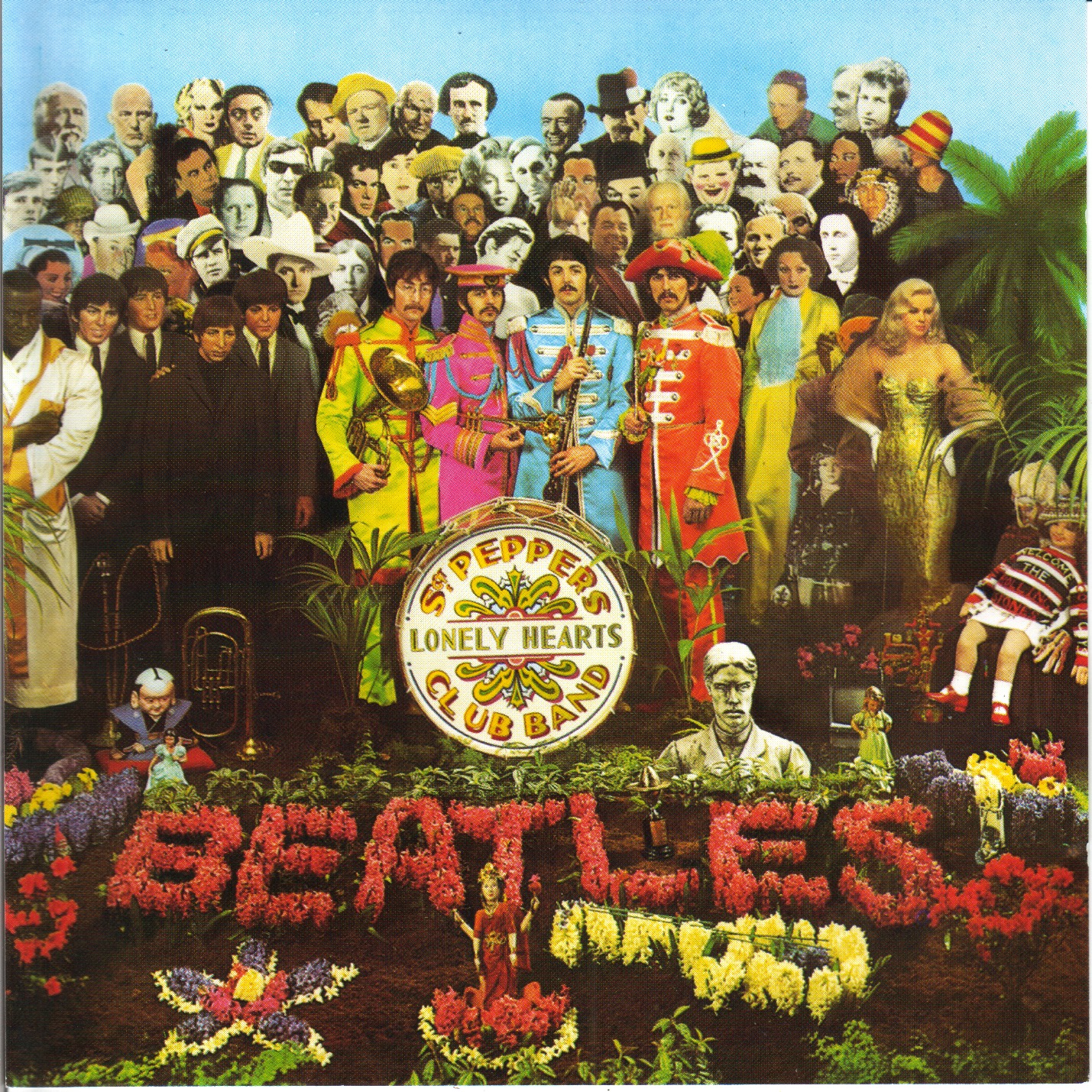
I caught the last gasp of the "Long Playing" (LP) album, with requisite fancy album cover, whilst coming of age in the late 70's-early 80's. It was quite an experience to buy music in those days. If you were lucky enough to be into a band that could put some bread into the artwork, the whole experience of listening to the music could be enhanced tremendously by the visuals. Yes/Crimson/Earthworks (among others) drummer Bill Bruford once opined that the album was your "mission statement"; indeed he was right. You could get a pretty good feel of the type of band you were about to listen to when you bought the album by the artwork employed by the band in question. Amongst my faves were Emerson, Lake & Palmer's Brain Salad Surgery, with its metallic presentation that represented the aggressive sophistication of the aforementioned recording quite well. A smart band with some artistic license could post a visual to its cover that could be tremendously arresting. A couple of additional cases in point: King Crimson In the Court of the Crimson King, Yes Fragile and Close to the Edge, Pink Floyd Dark Side of the Moon, Rolling Stones Sticky Fingers (complete with real zipper), Jethro Tull Stand Up (which actually had pop-up characters when opening the gatefold), and of course, Sgt. Pepper's.

Great stuff, it was. Sadly, with the advent of the compact disc (CD), the artwork was shrunk to one quarter of the size of the LP's canvass. I never did get the same buzz from buying a CD as I did from opening up an LP for the first time. (Rarely did I buy cassette tape either, unless it was specifically to play on a boom box or play on a Sony Walkman.) Reading the liner notes, the lyrics, and peering at the artwork contributed tremendously to the experience. Even though too much care went into not scratching the LP, and inevitably one always did with repeated play, it was a rich experience that has been lost to the ages. Now, in the age of MP3s, one needn't even buy a CD, and so the artwork has become utterly disposable. A shame really, but then it is extraordinarily convenient to have the equivalent of twenty-four days worth of music at my disposal at the click of a keyboard. If an LP has approximately forty minutes of playing time, that equals 1.25 albums per hour in a 24 hour period, and I have 24 days worth of music (according to my iTunes indicator), I would have 720 LPs in my apartment. Sheesh.

Technological progress, for the most part, is a good thing. But there's always that is lost with the onset of said technology. I won't miss the cassette or the CD, but the loss of the album artwork made available by the LP is slightly bittersweet for me. However, I'm sure this won't be a lost piece of LP artwork, except to make fun of.